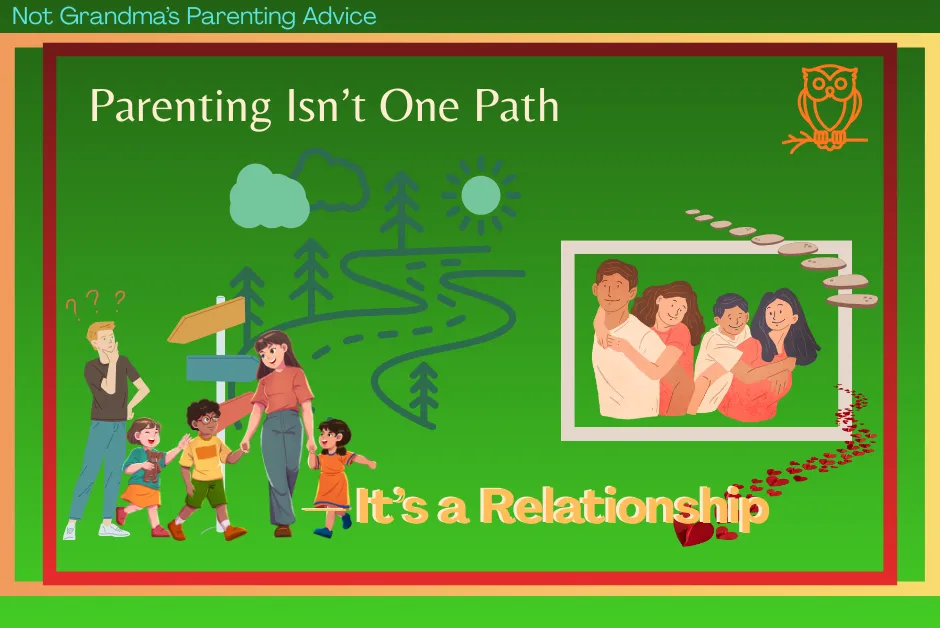
Parenting Isn’t One Path — It’s a Relationship
Parenting Isn’t One Path It’s a Relationship
A grounded, compassionate response to a recent Psychology Today article on “developmental parenting.”
I recently came across an article in Psychology Today describing parenting as a “primer” — a long, detailed summary of the skills and concepts behind effective childrearing. Much of it aligns with the established research on child development and emotional health. And there is real value in these frameworks.
But what I’ve found, both as a parent of four now-adult children and as someone who works daily with families navigating ADHD, high emotional intensity, and neurodivergence, is this:
Parenting is not a set of techniques it’s an evolving relationship shaped by the unique nervous systems, needs, and temperaments of both parent and child.
Below is my reframed interpretation of the central ideas, integrating developmental psychology with a more modern understanding of neurodiversity and emotional fitness.
Parenting Begins With Emotional Availability
The original article emphasises “transactional sensitivity” a concept that mirrors what I call emotional availability.
This is the heart of conscious, attuned parenting:
the capacity to see your child for who they are
to respond to their behaviour with curiosity rather than fear
to be present enough to notice what’s happening beneath the surface
For neurodivergent or emotionally intense children, this matters even more. Their internal world is often louder, faster, or more sensitive than adults realise. Emotional availability is the bridge that reduces misinterpretation and shame.
Skills and Strategies Matter But Without Understanding, They Miss the Mark
The Psychology Today piece highlights “parenting skills” and “developmental knowledge.”
This is important but information alone doesn’t create connection.
Where I diverge slightly is this:
Parents need to understand not just child development,
but their child’s development.
Every child arrives with a distinct behavioural profile, nervous system patterning, and relational style.
This is why a one-size-fits-all approach can lead parents to feel like they are failing or that their child is “not responding as they should.”
This is also why I integrate:
Human Behaviour Profiling (Extended DISC)
Human Design
Emotional Fitness tools
Lived neurodivergent experience
Because knowing why a child reacts the way they do changes everything.
Discipline Isn’t a Dirty Word But We Must Define It Clearly
The original article rightly states:
“Discipline is not a dirty word.”
I agree with a caveat.
Most parents hear “discipline” and think punishment or control.
But discipline, in the context of attuned parenting, means:
Guiding, not overpowering
Teaching skills, not forcing compliance
Modelling emotional regulation rather than demanding it from the child first
Corrective redirection absolutely has a place especially when behaviour becomes unsafe.
But it only works when embedded in:
nurturance
emotional safety
a parent’s own regulation
This is where traditional psychology sometimes misses a crucial point:
Misbehaviour in many children (especially ADHDers) is often a stress response, not a moral failing.
When we understand the nervous system behind the behaviour, “discipline” shifts from control to coaching.
Children Don’t Need Perfect Parents They Need Present Ones
The article emphasises a triad: nurturance, discipline, and living example.
These are indeed foundational.
But here’s the nuance I’ve learned through decades of experience:
Children learn much more from how we relate than from what we instruct.
Your living example is not whether you always get it right.
It’s how you repair, reconnect, and realign when things go sideways because they will.
Especially in households where ADHD or emotional intensity is present.
Communication Is Emotional Safety in Action
Good communication as the article suggests is both verbal and nonverbal.
But what matters most is this:
Are we communicating with the child or at the child?
Are we listening to understand or to correct?
Are we responding to the behaviour or to the unmet need beneath it?
Curiosity, imagination, and empathy are not extras.
They are the tools that transform power struggles into partnership.
And for children who feel deeply, think divergently, or have a high need for control, these tools prevent the internalisation of shame.
Parenting Begins at Birth And It Continues With Self-Development
Psychology Today notes that parenting “begins on day one.”
Absolutely.
But the deeper truth is:
Parenting evolves only when the parent continues to grow.
Every parent brings their own childhood conditioning, nervous system patterns, beliefs, and emotional habits.
You cannot teach a child to regulate while you are silently drowning.
You cannot model self-worth while secretly believing you are failing.
This is why my work focuses as much on the parent’s internal landscape as on the child’s behaviour.
Your child grows through the relationship.
And the relationship grows as you do.
A Modern, Compassionate Lens on What Parenting Really Is
In summary, the original article presents a strong psychological foundation.
Where my approach adds depth is here:
recognising neurodivergence as a natural human variation, not a deficit
supporting parents to understand their child's unique nervous system
emphasising emotional safety and attuned connection above behavioural control
reframing discipline as relational, not punitive
integrating the parent’s healing and self-awareness into the process
Parenting is not about raising perfect children it’s about building a relationship where both parent and child can thrive, learn, repair, and become more fully themselves.
Together we ARE Stronger.
With care,
Leanne
The Motherhood Maven
Parenting Mentor | Emotional Fitness Consultant


